
Frequently Asked Questions
Sacrificial Anodes and Cathodic Protection
Understand how sacrificial anodes work, why they are used and how they help protect marine and industrial assets from corrosion.
Sacrificial anodes are metal components designed to protect steel and other metals from corrosion by corroding in their place. They form part of a cathodic protection system used in marine, offshore and industrial environments.
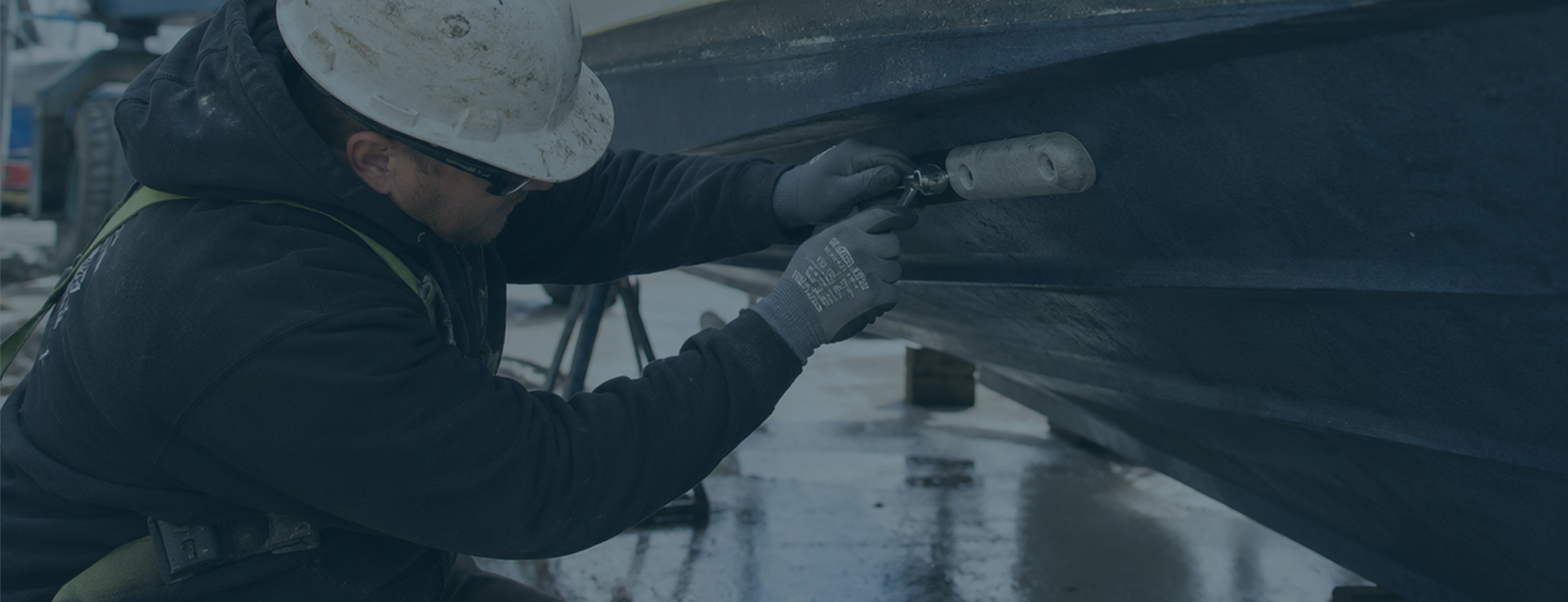
Sacrificial anodes are fitted to a vessel so they corrode before the hull, rudder, propeller shaft or other submerged metal parts. This helps reduce corrosion damage in saltwater environments.
Sacrificial anodes are commonly used on commercial vessels, offshore structures, rigs, ship hulls, ballast tanks, pipelines, jetties, harbour structures and submerged steel components.
Marine environments expose metal assets to saltwater, moisture and high-corrosion conditions. Sacrificial anodes help protect these assets and support longer service life, reduced maintenance and safer operation.
Replacement depends on the water conditions, vessel use, coating condition, anode size and protection requirements. Anodes should be inspected during scheduled maintenance, dry dock work or routine hull checks.
Frequently Asked Questions
Aluminium Anodes
Learn more about aluminium anodes, their benefits, common applications and why they are used for marine and offshore corrosion protection.
Aluminium anodes are used for cathodic protection in marine and offshore environments where high current output, long service life and lightweight corrosion protection are required.
Aluminium anodes can be used on ship hulls, ballast tanks, offshore platforms, oil rigs, subsea equipment, pipelines and marine infrastructure.
Aluminium anodes offer high electrochemical efficiency, long operational lifespan, lightweight construction and excellent performance in seawater environments.
Yes. Protea Foundry can supply aluminium anodes in standard configurations or manufacture custom sizes, shapes, steel core configurations and mounting options to client specifications.
Yes. Aluminium anodes can be supplied in weld-on and bolt-on configurations, depending on the installation method and project requirements.
Frequently Asked Questions
Zinc Anodes
Find answers about zinc anodes, where they are used and how they support reliable protection for vessels, harbour structures and marine systems.
Zinc anodes are used to provide sacrificial corrosion protection for vessels, marine equipment, harbour structures and other metal assets exposed to seawater.
Zinc anodes are commonly installed on vessel hulls, propeller shafts, rudders, sea chests, jetties, dock systems and harbour infrastructure.
Zinc anodes offer stable electrochemical performance and have a long-standing track record in marine corrosion protection.
Yes. Protea Foundry can manufacture zinc anodes to client-specific dimensions, shapes, weights and mounting requirements.
Available options include weld-on zinc anodes, bolt-on zinc anodes, hull anodes, tank anodes and custom cast zinc anodes.
Frequently Asked Questions
Product Options and Custom Requirements
Explore Protea Foundry’s anode options, including weld-on, bolt-on, custom and project-specific anodes made to client specifications.
Protea Foundry manufactures aluminium anodes, zinc anodes, weld-on anodes, bolt-on anodes, custom manufactured anodes and yacht anodes.
A weld-on anode is designed to be welded directly to a steel structure, making it suitable for ship hulls, offshore platforms, tanks, rigs and marine infrastructure.
A bolt-on anode is mechanically fastened to a structure, making it useful for maintenance, replacement and applications where welding is not preferred.
Yes. Protea Foundry can manufacture anodes from supplied drawings, samples, measurements or technical specifications.
Yes. Protea Foundry supports both one-off custom manufacturing and production-scale manufacturing for repeat project requirements.
Frequently Asked Questions
Machining, Finishing and Manufacturing
Get practical information about machining, drilling, tapping, surface finishing and how anodes are prepared for accurate installation.
Yes. Protea Foundry offers machining services for sacrificial anodes and custom cast components, including work where accurate dimensions and installation details are required.
Finishing services can include surface preparation, custom finishing to specification, drilling, tapping and fabrication support.
Machining helps ensure that anodes have the correct dimensions, mounting holes, contact surfaces and installation points for practical use.
Yes. Drilling and tapping can be carried out where anodes require mounting holes, threaded sections or specific installation points.
Yes. Prototype and development work is available for clients who need to test, refine or develop a custom anode before production.
Frequently Asked Questions
Material Traceability and In-House Testing
Learn about material traceability, batch identification, in-house testing and the production documentation needed for technical or project-specific orders.
Protea Foundry can provide in-house testing records and production documentation where agreed during the quotation stage and where the required information is available for the product.
Material traceability links a finished product to its material, batch and production records, helping clients confirm key manufacturing information.
Traceability, batch records and in-house testing requirements should be confirmed before production starts to avoid delays or missing production documentation.
Depending on the order, Protea Foundry may provide material traceability documentation, batch identification, in-house testing records and manufacturing process documentation.
Traceability supports accountability, quality control and project confidence, especially for vessels, offshore structures, pipelines and marine infrastructure where product records may be required.
Frequently Asked Questions
Industries and Applications
See how Protea Foundry supports marine, offshore, ship repair, harbour, port and marine civil infrastructure projects.
Protea Foundry serves the marine, offshore oil and rigs, marine civil infrastructure, ship repair, shipyard, port and harbour sectors.
Yes. Protea Foundry supports ship repair and shipyard projects with replacement anodes, retrofit corrosion protection solutions and fast-turnaround manufacturing support.
Yes. Protea Foundry supplies heavy-duty sacrificial anodes for offshore structures, oil rigs, splash-zone environments and subsea applications.
Yes. Sacrificial anodes are used to protect harbour infrastructure, jetties, dock systems and submerged steel structures from corrosion.
Yes. Protea Foundry can manufacture anodes for marine civil infrastructure, including steel piling, submerged structures, coastal assets and long-term corrosion protection systems.